

CSM Is Asking About Pharmacy Contracting: Reasonable and Relevant Sounds Good to Me!
You know that the work of dispensing many generic medications costs more than the medication itself. You also know what it feels like to fill one of those drugs, and get reimbursed less than the drug cost, not to mention the dispensing work. And you likely also know the frustration of researching contract rates and having more questions than answers.
Now, CMS is asking about those very issues. Your experience matters. Your data can help explain what needs to change.
The Medicare Part D Reasonable and Relevant Pharmacy Contracting Standards Request for Information (RFI) is an opportunity to put your pharmacy’s experience directly into the conversation about future contracting standards.
You do not need to answer every question. You do not need to speak for the entire profession. But you can speak for your business, your patients, and the realities that your reports reveal. Comments are due November 23, 2026.
Why This Opportunity Matters
This RFI is not a final rule, and it does not immediately change your reimbursement. It will inform future rulemaking on reasonable and relevant pharmacy contract terms and conditions, with standards intended to apply beginning with the 2029 plan year.
CMS is asking about more than reimbursement rates. Things like dispensing fees, contracting practices and terms, quality and performance measures, audits, and restrictions on dispensing are all included topics.
Importantly, CMS specifically encourages commenters to provide hard data, and your first-person experience with it. They also want to learn about contract language (appropriately de-identified, of course), and real stories about patient access.
In other words: tell your story, but bring the evidence that helps explain it.
Start with the problems your reports can help document.
You do not have to build a comprehensive research project. Choose the issues that most affect your pharmacy, select a clearly defined reporting period, and gather information that shows their frequency and impact.
Outcomes Insights offers several useful starting points. Below are some reports that can be used to build your response.
1. Show how often prescriptions are reimbursed below acquisition cost.
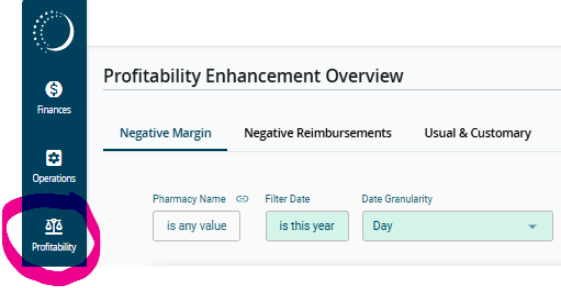
Start with the Profitability dashboard, and the Negative Margin report to identify affected fills and patterns by plan.
-
The number and percentage of completed Part D fills with negative gross margin.
-
The combined acquisition-cost shortfall on those fills.
-
Whether losses are concentrated in particular plans, drugs, or drug categories.
Validate your acquisition costs first; accurate margin reporting depends on accurate cost of goods. Also distinguish reimbursement below drug acquisition cost from reimbursement that fails to cover the full cost of dispensing. Both matter, but they answer different questions.
2. Explain what low or nonexistent dispensing fees leave uncovered.
CMS explicitly asks whether dispensing fees cover the costs of dispensing—and whether those fees should stand on their own rather than depend on ingredient-cost reimbursement.
Use your claim-response or reimbursement-detail reporting to identify claims with zero or low separately reported dispensing fees. Define what you mean by “low,” then document the count, percentage, and distribution by plan.
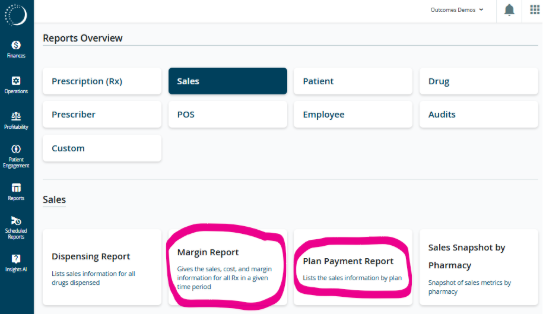
Pair that information with Insights’ Margin Report and Plan Payment Report to show the broader financial picture. Supplement it with your own records of dispensing expenses, such as staffing, supplies, technology, and occupancy.
A zero dispensing fee alone does not establish the total financial outcome of a claim. But it is relevant evidence when explaining how a payment structure accounts—or fails to account—for the work required to dispense safely.
Connect your findings to RFI Section A.
3. Put numbers behind unclear contract attachments.
If a rate sheet, attachment, provider manual, or amendment makes reimbursement difficult to understand, explain precisely what is unclear.
Is the pricing methodology undefined? Is an effective-rate guarantee difficult to reconcile? Can a manual change the financial terms without a formal amendment? Were important payment details unavailable when you had to accept the agreement?
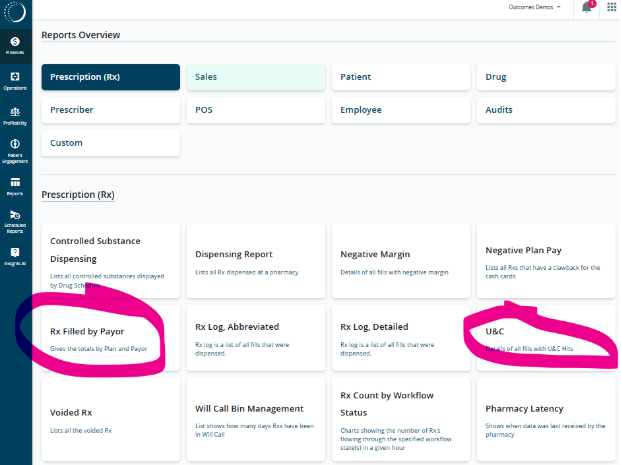
Use the Rx Filled by Payor, and claim-level dispensing information to quantify the volume and dollars associated with the affected plan or arrangement. Then compare those findings with the applicable contract documents.
For example, you might report the number and value of Part D fills subject to an attachment whose payment methodology you could not independently reproduce. If you cannot determine which methodology applied to individual claims, describe that limitation—it is part of the transparency problem.
Reports can establish the financial scope. The contract language and your documented experience establish what was unclear. Avoid calling a provision misleading without explaining the specific discrepancy.
Connect your findings to RFI Section B: Current Contracting Practices.
4. Look at “lesser of” pricing and usual-and-customary payments.
CMS specifically asks about “lesser of” pricing methodologies and how usual and customary (U&C) pricing is defined.
Insights’ Usual & Customary dashboard, U&C report, and Paid at U&C report can help identify affected fills. Examine how frequently Part D claims are paid at U&C and whether those fills have negative or low margins.
If the contract’s definition or application of U&C creates uncertainty, explain the issue alongside the financial results. The goal is not simply to report that a claim paid at U&C; it is to explain how the methodology works in practice and what standard would make it clearer or more predictable.
Connect your findings to RFI Sections A and B.
Turn your findings into a useful comment
The strongest response does more than identify a problem. It helps CMS understand what a workable standard would look like.
For each issue, use this structure:
-
Describe your pharmacy. Explain your setting, services, and the patients you serve.
-
Identify the RFI section. Make it easy to connect your feedback to CMS’s questions.
-
Present the evidence. State the reporting period, affected population, counts, percentages, and financial impact.
-
Explain the consequence. Describe the effect on operations, financial predictability, or documented patient access.
-
Recommend a specific improvement. Explain what would make the terms more transparent, reasonable, or enforceable.
A starting point might look like this:
During [reporting period], our pharmacy dispensed [number] completed Medicare Part D prescriptions. Of those, [number], or [percentage], had total recorded reimbursement below recorded drug acquisition cost, producing a combined shortfall of [amount] before dispensing expenses. We identified these fills using [report names] and validated costs against [source]. This affected our operations by [documented impact]. We recommend that CMS establish [specific standard] to address this issue.
Your recommendation might concern acquisition-cost reimbursement, transparent dispensing-fee terms, complete financial disclosures before acceptance, advance notice of material changes, or a clearly defined dispute process. Tie the recommendation to the evidence you actually have.
And follow NCPA for more; they will continue putting out advice and even some templates for suggested ways to respond. If you need more help, please reach out and ask!
Keep the evidence focused—and safe to share
Before submitting:
-
Confirm which claims are Medicare Part D. Do not assume a payer name or a patient’s age establishes coverage.
-
Use consistent definitions. Separate claim transactions from completed fills and explain how you handled reversals and adjustments.
-
Identify the data’s limits. If later reconciliation is unavailable, do not describe point-of-sale results as final net reimbursement.
-
Protect sensitive information. CMS warns that comments are public and instructs respondents not to include proprietary or confidential information. Remove patient-identifying information and review supporting materials carefully.
You can support a pharmacy association’s response and still contribute your own distinct experience. A focused comment about your pharmacy can add context that a broader submission cannot.
Make your pharmacy part of the record
To comment electronically, visit the CMS RFI docket on Regulations.gov, follow the submission instructions, and reference CMS–4217–NC. Submit by November 23, 2026.
You do not have to solve every problem in pharmacy contracting to make a useful contribution.
Start with one issue. Run the report. Validate the findings. Explain what the numbers mean for your business and your patients. Then tell CMS what needs to change.
Your reports already help you understand your pharmacy. This is an opportunity to use them to help CMS understand it, too.